
Once tipped to emerge as the biggest exporter, the pharmaceutical industry is yet to acquire the scale of those in software services, says Krishna Kant.

There is a sense of relief in Beijing that Modi will be at the helm of affairs in Delhi at a critical juncture in the geopolitics of the region, says Ambassador M K Bhadrakumar.

On the last day of FY!5, the Sensex ended lower by 18.37 points at 27,957.49.

The benchmark BSE Sensex ended down 2.23 per cent. The Bank Nifty fell 3.59 per cent.

Among the private banking majors ICICI Bank and HDFC Bank were down 0.2%-0.5% each.
Sensex lost 76 points to end at 25,589 while Nifty shed 23 points to end at 7,649.
The broader markets, however, outperformed their larger peers.
HCL Technologies and Infosys should benefit more than TCS and Wipro
However, IT stocks fell on weak growth forecast by Gartner

Investors accumulated quality stocks at valuable and attractive levels.

Indices reversed all its losses during late trades.

To a lay observer, therefore, India today presents two conflicting realities.
Number of stocks trading above 50 times and 100 times earnings are at record highs. When this happened in 2015 and 2016, the Sensex fell 22.6 per cent in a little over a year's time after peaking in January 2015, while it fell by 11.3 per cent in two months from its peak in September 2016.
Sensex gained 38.18 points or 0.15% at 25,918.95 and Nifty ended higher by 12.50 points or 0.16% at 7,739.55.

BSE Mid-cap index ended at a record closing high of 10499.86 and CNX Mid-cap index ended at a record closing high of 12672.85 levels.

Investors will remain cautious ahead of F&O expiry.

Omkeshwar Singh, Head, Rank MF, a mutual fund investment platform, answers your queries.

Sensex in green in afternoon trade.

Stellar rally in ITC shares along with strength in the Asian equities capped the downside.

Above normal monsoon forecast and strength in Asian equities lifted sentiments.

In good times, analysts justify valuations giving interesting investment rationale.

Market experts on why the bulls will be on the rampage first thing on Monday after the scrapping of enhanced surcharge on FPIs and other measures to ease the systemic liquidity squeeze and boost demand. Prasanna D Zore reports.

Markets were left high and dry last week, as the 'Monsoon Effect' played havoc on trader sentiment.
.jpg)
The 30-share Sensex ended 117 points higher at 26,560 and the 50-share Nifty gained 31 points to end at 7,936.
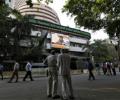
The broader markets also ended lower in line with the benchmark indices

'India is likely to do better than other emerging markets.'

What China's market crash means for India

The index had risen over 585 points in the previous three sessions.
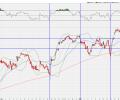
In India, however, the Nifty continues to climb a wall of worry as general elections loom, fiscal deficit surges and the current account deficit is barely under control following subdued gold and crude prices, says Sonali Ranade.

US stocks rose more than 1% on Tuesday, with the S&P 500 coming less than 2% below its record peak set last month.

If you are not happy with the price offered at buybacks, you could be in for a long haul.

The Indian government and RBI must keep foreign equity investors happy and avoid crushing growth expectations, notes Akash Prakash.

More, many market gurus expect the Sensex to reach 30,000 levels by December and 40,000-45,000 in three to four years.
Benchmark share indices ended lower for the third straight session as investors turned cautious amid tensions in Iraq even as consumer durables shares stole the limelight tracking rally in gold prices.
